SEO & Performance
Technical SEO, Core Web Vitals and search visibility done properly.
Built to be found. Engineered to perform.
Search visibility is not a plugin or a one-off setting. It comes from a website that search engines can access and understand, content that genuinely helps people, a clear structure and steady improvement after launch.
I build the technical foundations into every site, measure what actually happens, and help you decide what to improve next. No promised rankings — just work that gives your pages a fair chance to be discovered and a fast, usable experience when people arrive.
What this service covers
Technical SEO
Crawlable pages, correct status codes, canonical URLs, sitemaps, hreflang and structured data, built in from the start.
Core Web Vitals
Fast loading, quick responses to taps and clicks, and layouts that don't jump — measured, then improved.
AI Search Readiness
Clear, well-structured and credible content that is easier for generative search experiences to read and summarise.
Visibility Monitoring
Search Console reviews of indexing, queries and technical issues, so decisions are based on real data.
Technical SEO foundations
Server-side rendering and crawlable content — every page arrives as complete HTML, so search engines and link previews see the real content without waiting for scripts.
Indexable pages and correct HTTP status codes — real pages return 200, missing pages return a genuine 404 and moved pages redirect permanently. Search engines get a clear signal about what exists.
Canonical URLs — each page declares its one preferred address, so duplicates (tracking parameters, trailing slashes) don't compete with each other.
XML sitemaps and robots.txt — published pages are listed automatically and drafts never appear. A sitemap helps discovery; it does not guarantee indexing.
hreflang for multilingual sites — English and Polish versions point to each other, helping search engines show the right language to the right audience.
Structured data — services, breadcrumbs and organisation details are described in a machine-readable format where it accurately reflects the page.
Semantic HTML and internal links — one clear H1, logical H2/H3 headings and meaningful links between related pages help both visitors and crawlers understand the site.
Redirects and duplicate content — when a URL changes, the old address keeps working through a permanent redirect, preserving links and avoiding duplicate pages.
Website performance
Largest Contentful Paint (LCP) — how quickly the main content appears. Visitors decide within seconds whether to stay.
Interaction to Next Paint (INP) — how quickly the page responds when someone taps, clicks or types. Slow responses feel broken, especially on phones.
Cumulative Layout Shift (CLS) — whether the layout jumps while loading. Stable pages prevent mis-taps and frustration.
Image optimisation — modern formats, correct sizes and lazy loading, so images look sharp without slowing the page.
Mobile usability — layouts, text sizes and buttons designed for phones first, where most local searches happen.
JavaScript and animation performance — only the code a page needs, and motion that uses efficient techniques and respects reduced-motion settings.
Why real measurements matter — lab tests such as PageSpeed Insights are useful snapshots, but results vary between runs, devices and networks. Field data from real visitors, where available, shows the actual experience. I use both and report them honestly.
SEO, AEO and GEO — what's the difference?
SEO
Search Engine Optimisation: improving how accessible, understandable and relevant your pages are in traditional search results.
AEO
Answer Engine Optimisation: structuring information so specific customer questions are answered clearly and directly on the page.
GEO
Generative Engine Optimisation: making content clear, credible and accessible for generative search experiences. No markup, button or hidden metadata guarantees an AI citation.
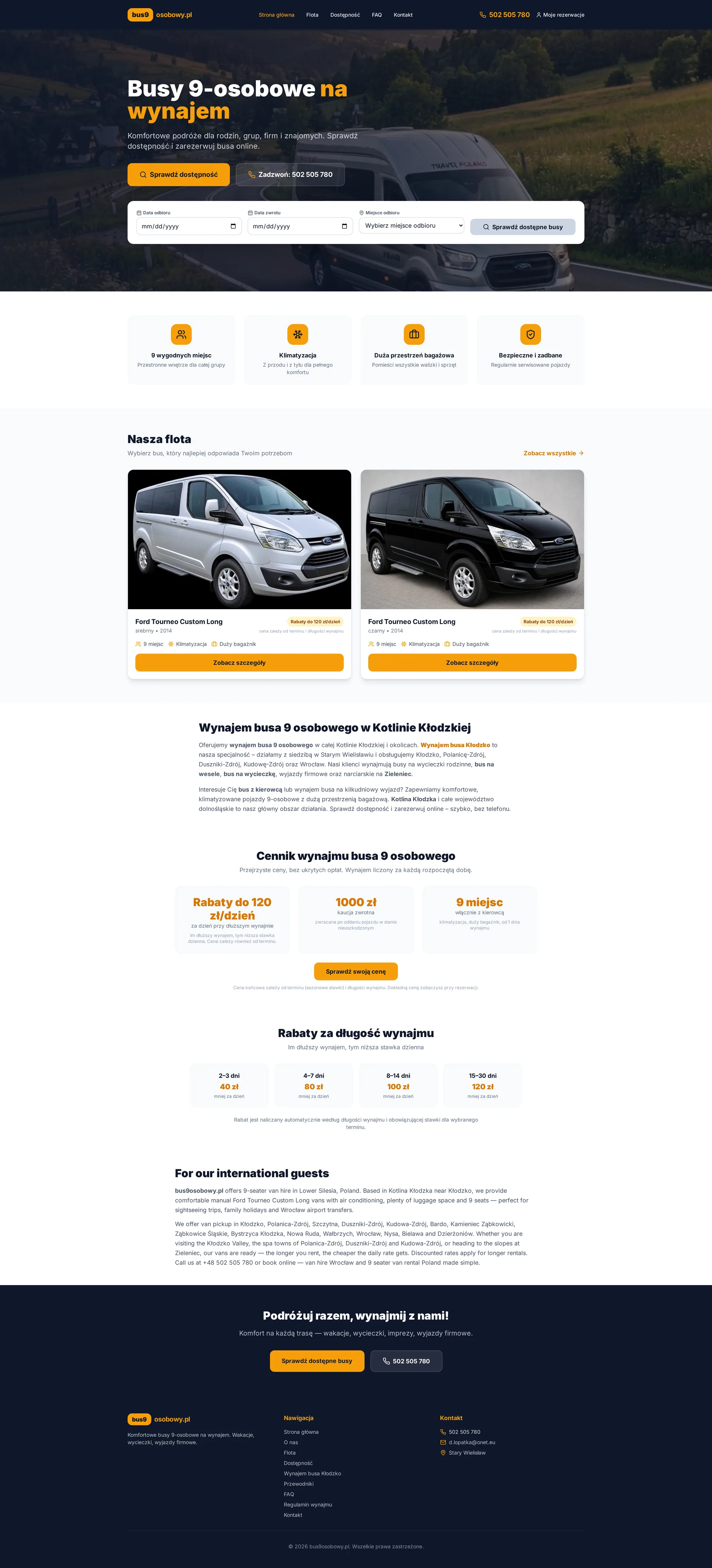
Real project: Bus9osobowy.pl
Implemented: server-rendered pages, an XML sitemap of published pages, canonical URLs, page metadata and structured data, local-focused content for a minibus rental business, and Search Console monitoring.
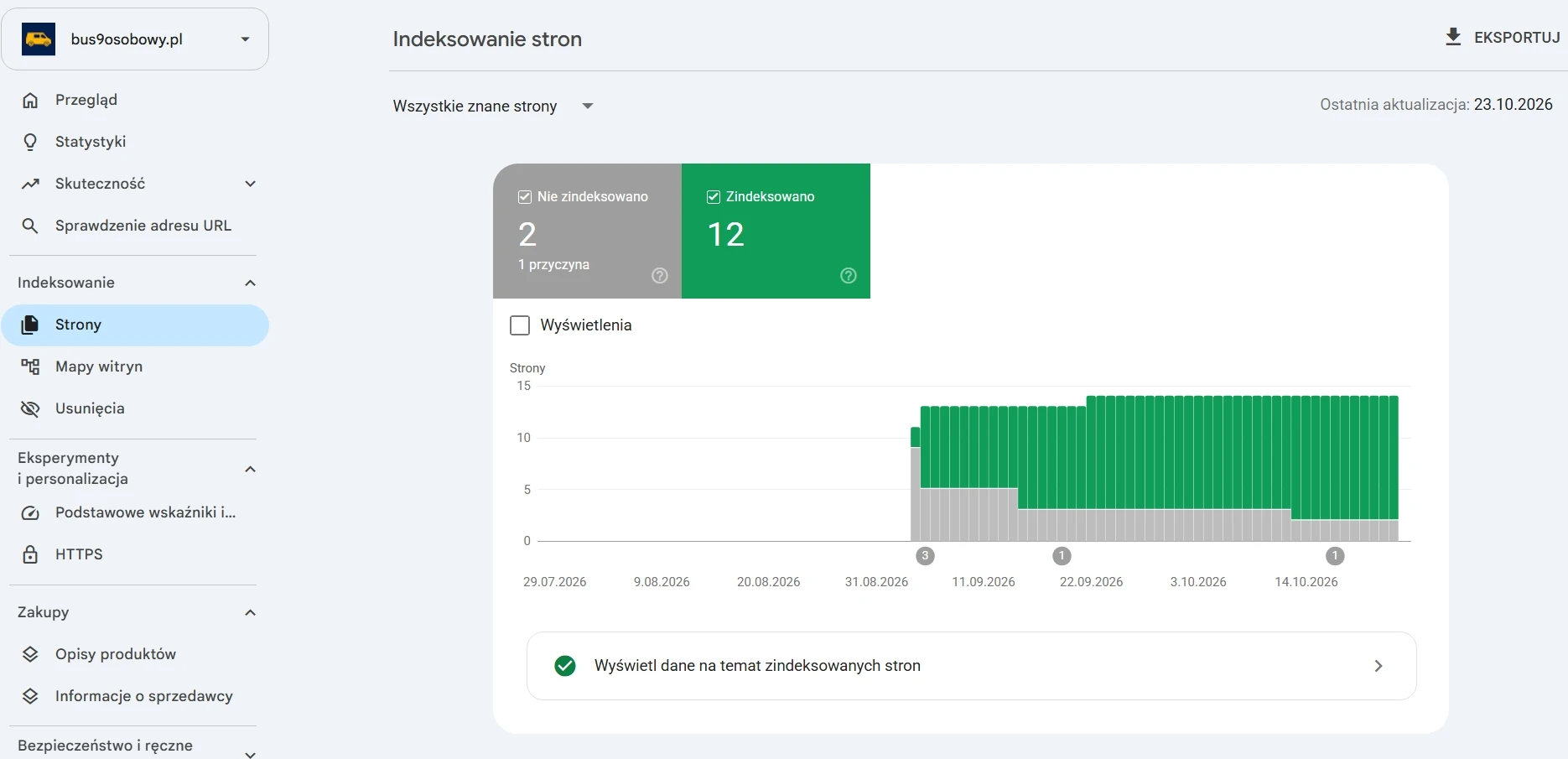
Measured: the Search Console page indexing report below. It shows a point-in-time status, not a ranking or traffic result.
The live website
Search Console: page indexing
Real project: Automatic Gearbox Southampton
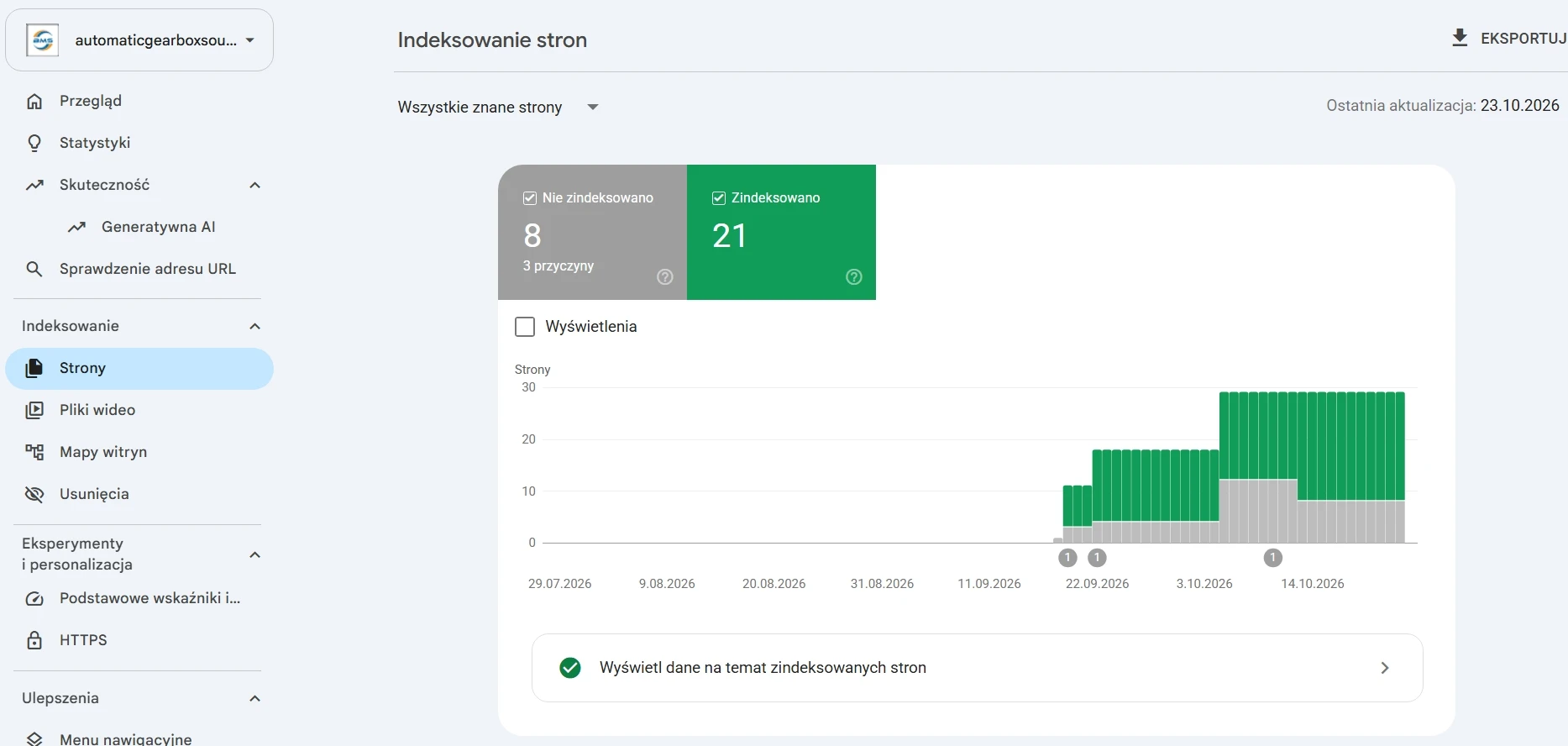
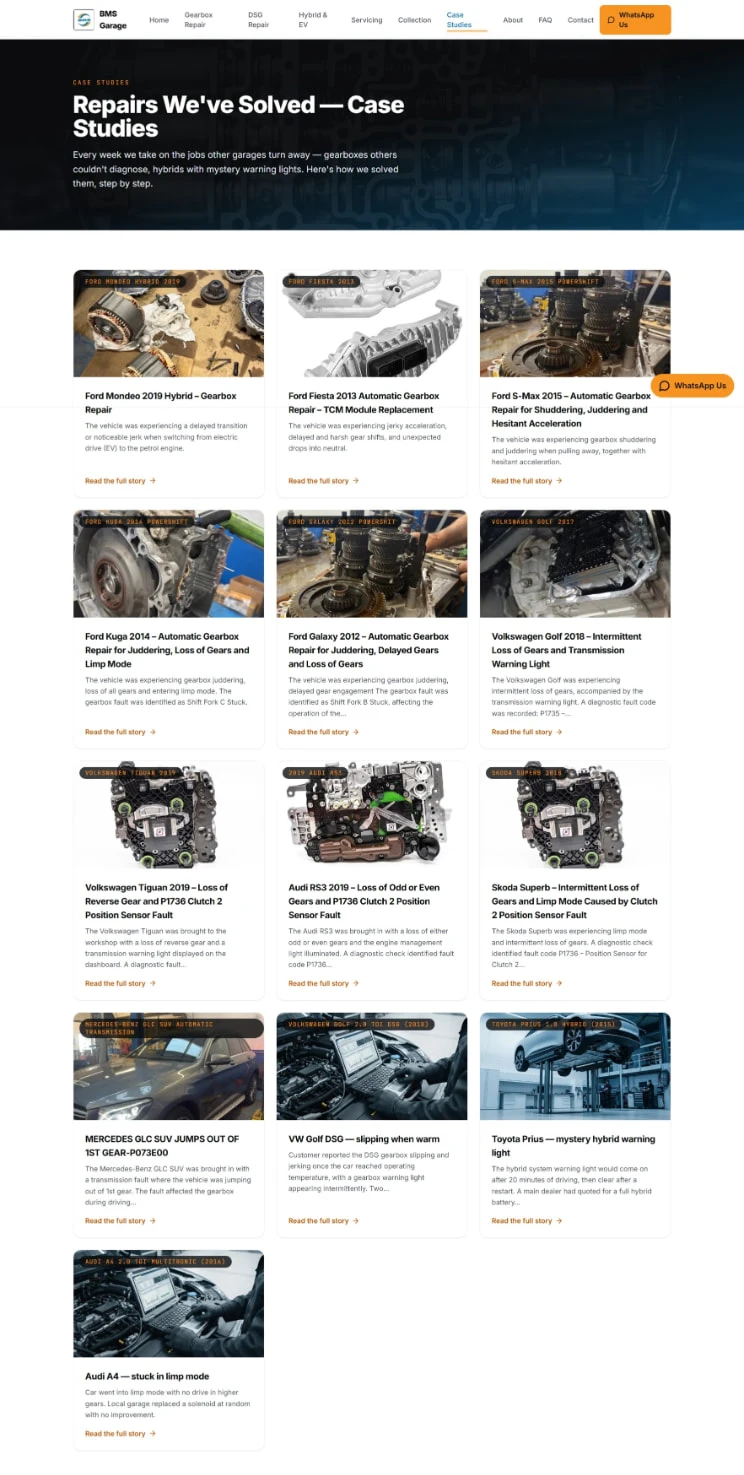
Service-specific pages, genuine repair case studies and a CMS the garage manages itself create regular opportunities to publish helpful, relevant content. These figures come from the site's Google Search Console. Each one has its own report and period.
- Indexed pages
- 21
- Page indexing report, last updated 23 Oct 2026 (8 not indexed).
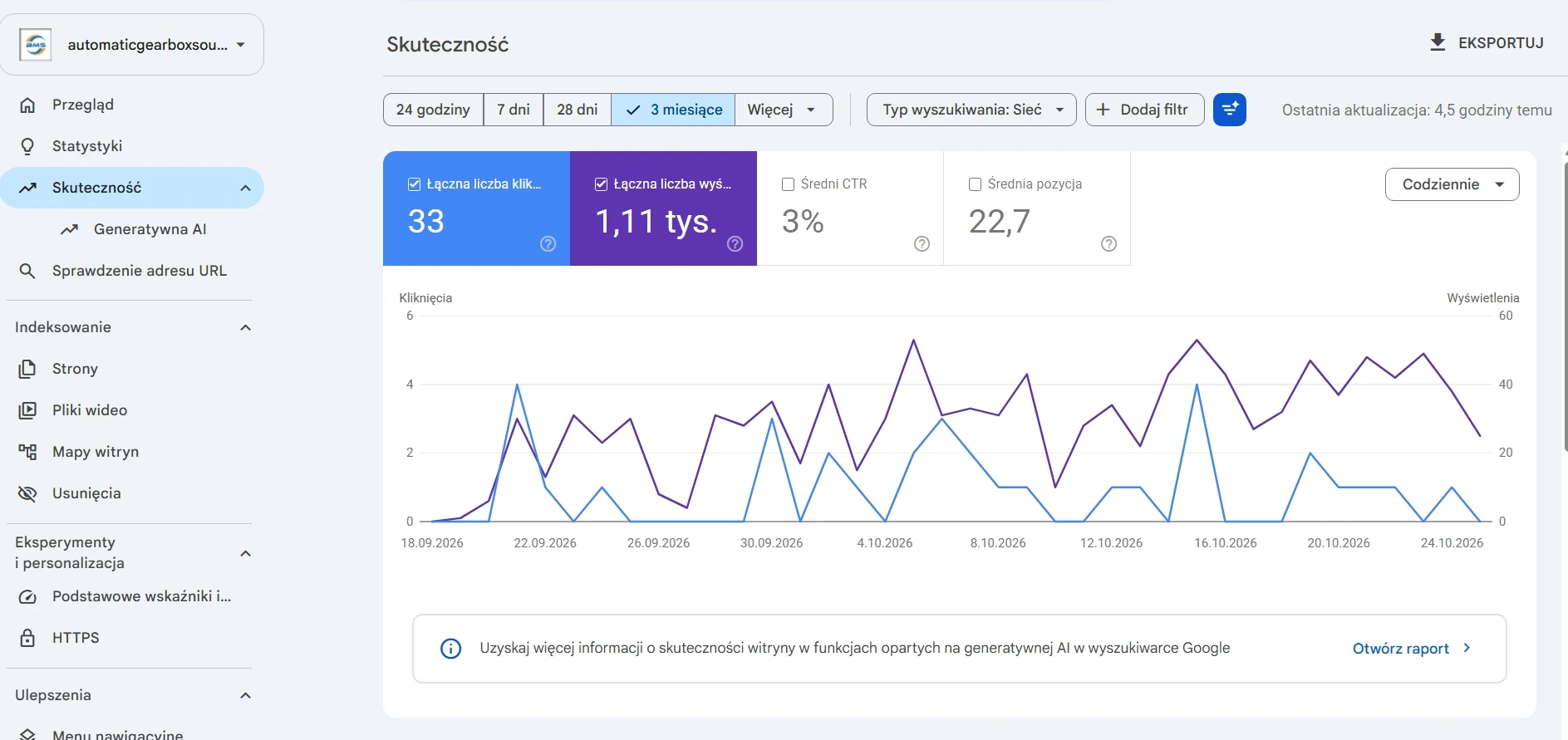
- Search impressions
- ~1,110
- Performance report, web search, 3-month view (chart 18 Sep – 24 Oct 2026).
- Search clicks
- 33
- Same performance report and period. CTR 3%, average position 22.7.
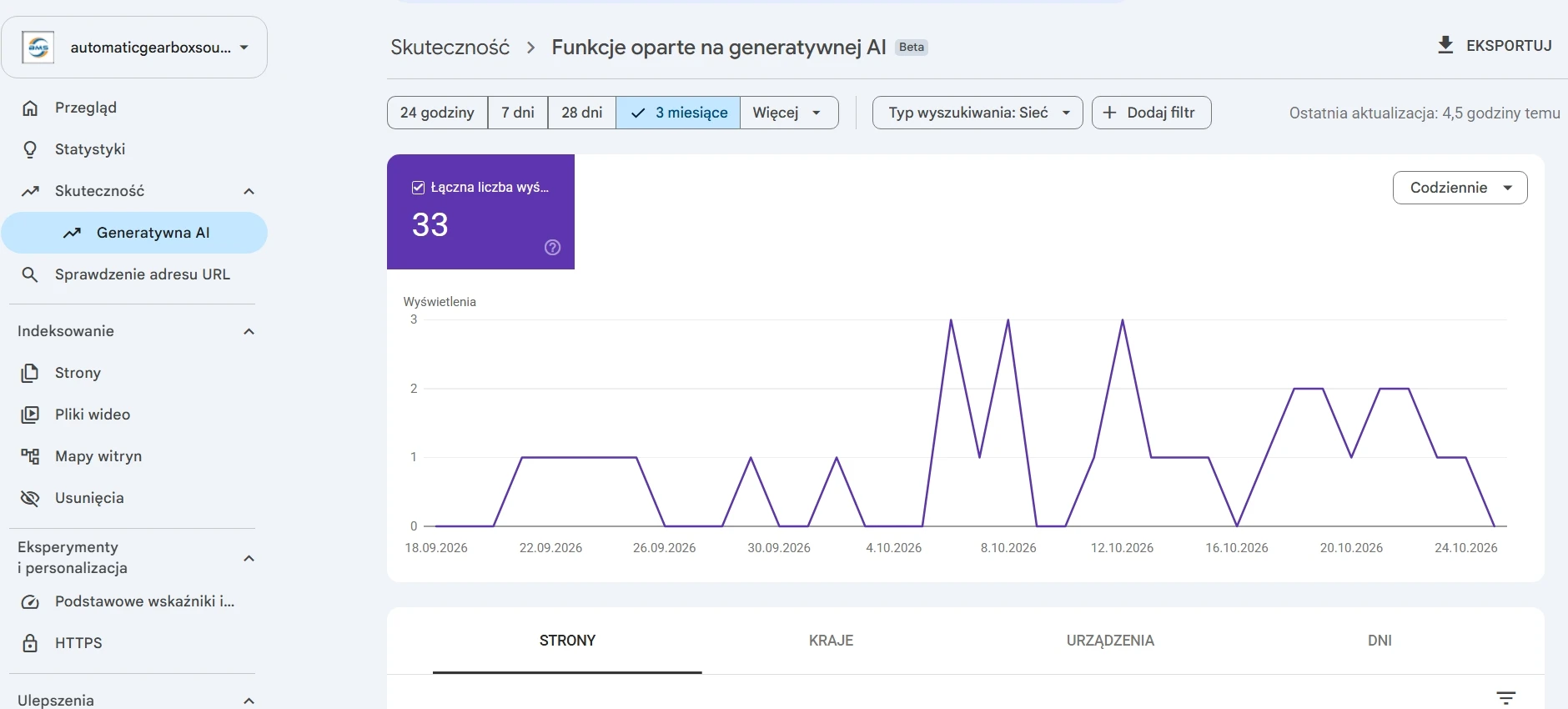
- Google AI-feature impressions
- 33
- Generative AI features report (beta), web search, 3-month view (chart 18 Sep – 24 Oct 2026). Impressions, not citations or customers.
Search performance
Generative AI features in Google Search
Search Console: page indexing
Published case studies
From a real job to a searchable page
- 1
Real customer job
A genuine repair the garage has carried out.
- 2
Case study
The team writes it up in the CMS with photos and details.
- 3
Published page
One click creates a new page with its own URL and metadata.
- 4
Sitemap discovery
The page is added to the XML sitemap automatically.
- 5
Search monitoring
Indexing and queries are reviewed in Search Console.
Inclusion in a sitemap helps search engines discover a page. It does not guarantee indexing or rankings.
Performance measured, not promised.
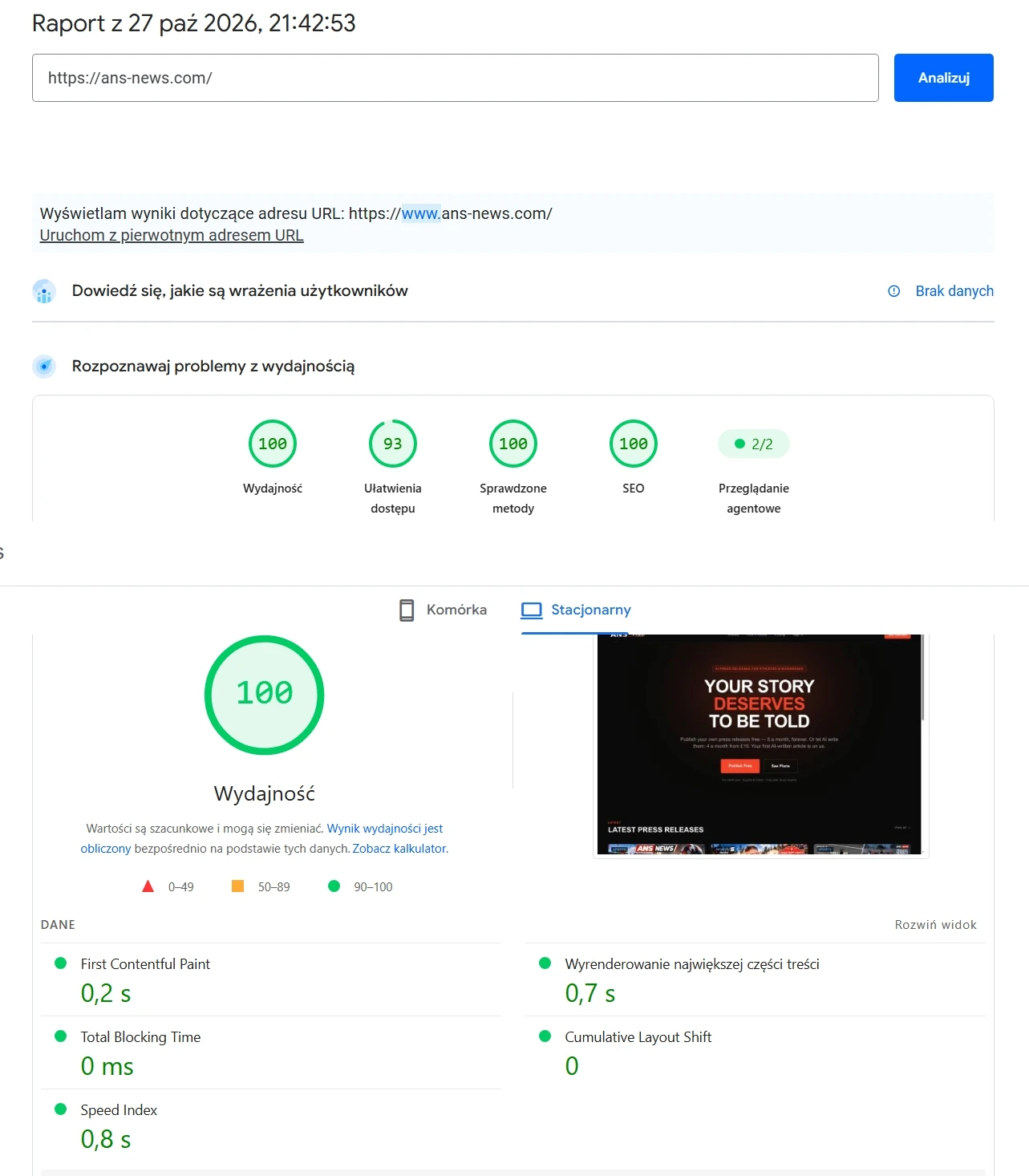
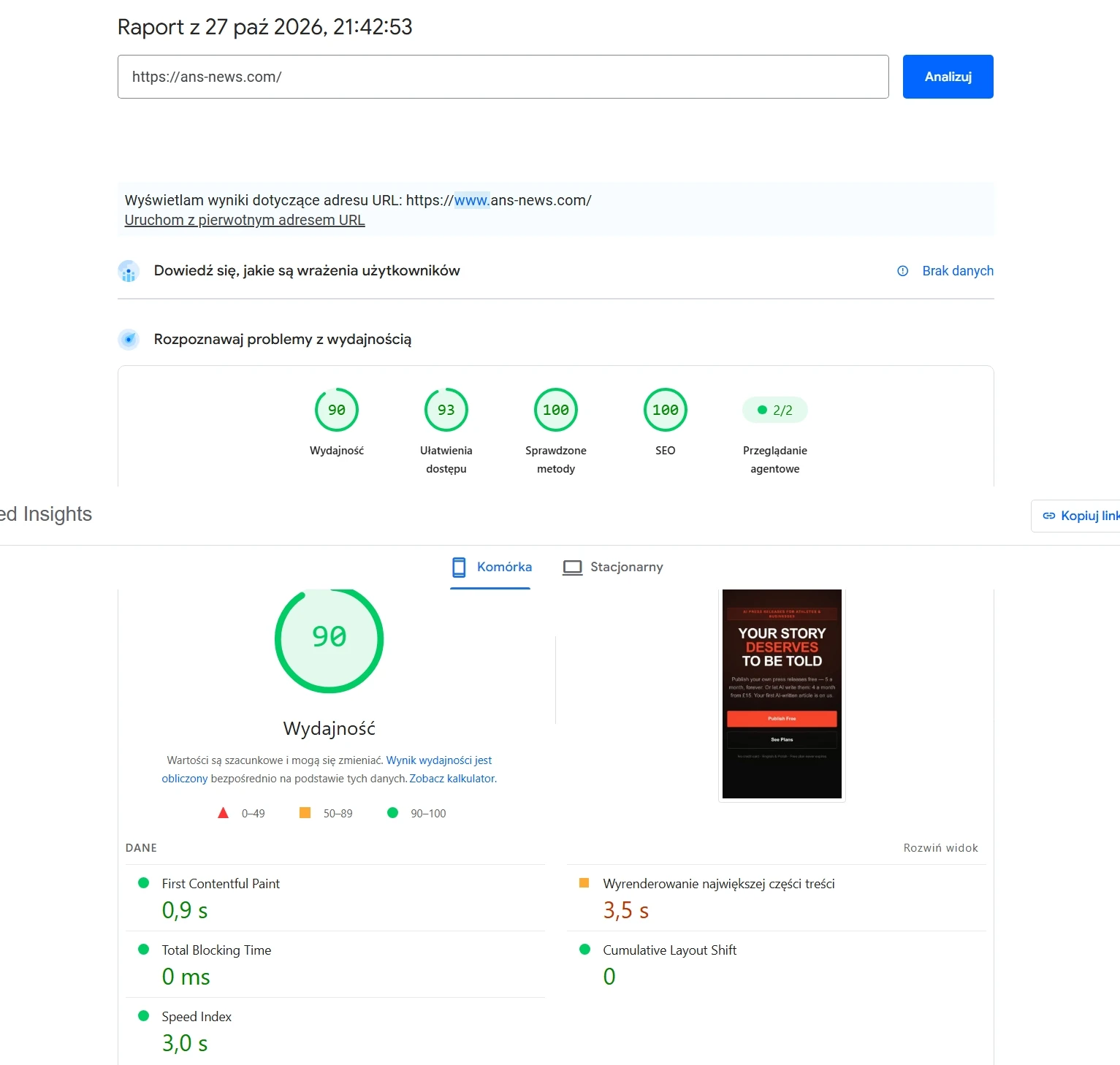
Real project: ANS News. PageSpeed Insights lab tests of www.ans-news.com, report of 27 Oct 2026, 21:42:53.
Desktop: Performance 100 · Accessibility 93 · Best Practices 100 · SEO 100 · LCP 0.7 s · CLS 0.
Mobile: Performance 90 · Accessibility 93 · Best Practices 100 · SEO 100 · LCP 3.5 s · CLS 0. The mobile LCP is above Google's 2.5-second "good" threshold, so it remains an area to improve.
These are individual laboratory tests, not real-user field Core Web Vitals (no field data was available for this site) and not guaranteed future scores. Results vary between runs.
Desktop
Mobile
A growing library of searchable articles
Every published ANS News article gets its own page with a meaningful headline, metadata, images and links to related content. Before publishing, authors see an SEO preview of how the title and description may appear.
Review with SEO preview
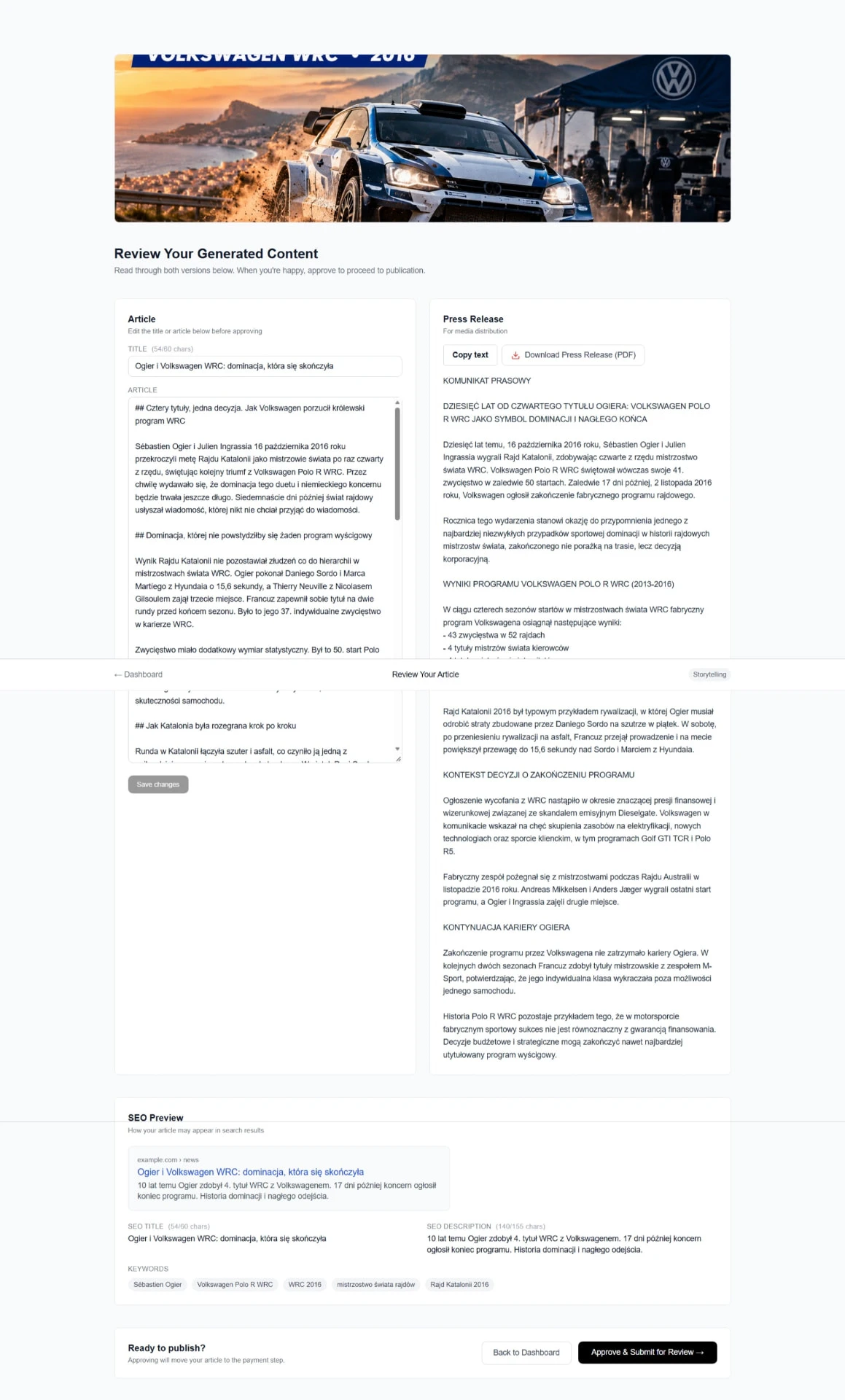
Published article
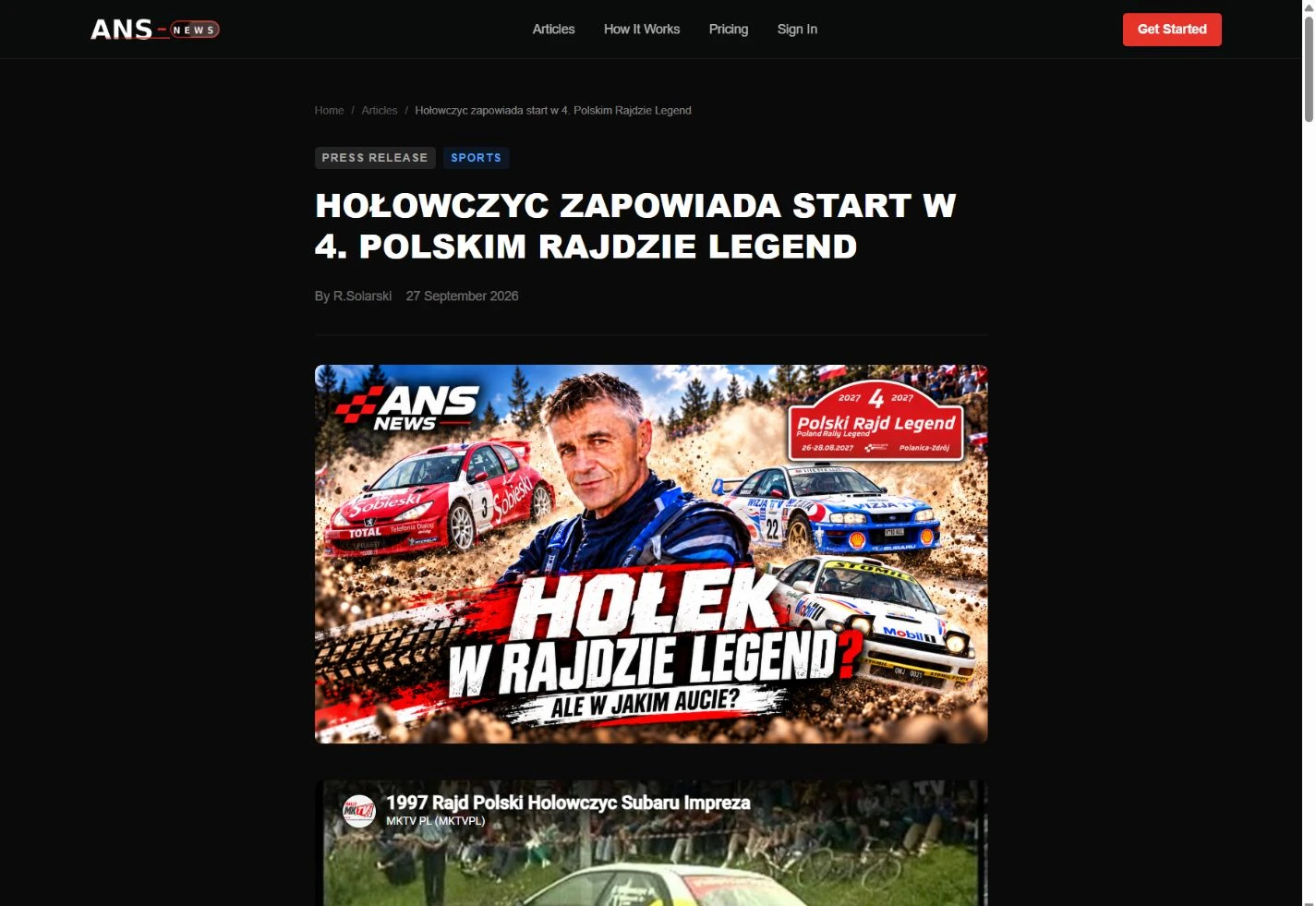
Ongoing optimisation
- 1
Technical audit
Check crawling, indexing, speed and structure.
- 2
Fix priority issues
Resolve what blocks discovery or hurts users first.
- 3
Improve content and structure
Clarify pages, headings and internal links.
- 4
Monitor results
Review Search Console and performance data.
- 5
Refine continuously
Adjust priorities based on what the data shows.
Your website launch is the beginning, not the finish line.
- 1
Day 0
Baseline measurements and launch checks.
- 2
Day 30
Discovery and indexing audit.
- 3
Day 60
Early search visibility and query review.
- 4
Day 90
Technical optimisation and performance review.
- 5
Day 180
Growth assessment and recommended next actions.
We don't disappear after launch. We monitor your website, review its search visibility and address agreed technical issues throughout the follow-up period. Included in qualifying website projects: scheduled audits and agreed technical fixes within the defined project scope. No specific rankings, indexing, traffic or AI citations are guaranteed.
Frequently asked questions
How long does SEO take to show results?
It depends on the competition, the site's history and how much useful content it has. New pages are often discovered within days to weeks, but meaningful visibility usually builds over months. Nobody can honestly promise a date.
Why is my website not indexed by Google?
Common causes include pages blocked by robots.txt or noindex, missing or broken sitemaps, duplicate content with a different canonical, server errors, or pages Google has crawled but not yet chosen to index. Search Console usually shows the reason, and that is where an audit starts.
Can a website appear in ChatGPT or AI search results?
It can, but nobody controls it. AI tools draw on many sources. Clear, accurate and accessible content gives your site a better chance of being understood, but no technique guarantees being cited or recommended.
What is the difference between SEO, AEO and GEO?
SEO improves visibility in traditional search results. AEO structures content to answer specific questions clearly. GEO focuses on clarity and credibility for generative search experiences. They overlap heavily and all rely on the same foundations: a technically sound site and genuinely helpful content.
Does website speed affect SEO?
Page experience, including Core Web Vitals, is one of many signals Google considers, but relevance and content quality matter more. Speed matters most for visitors: slow pages lose people before they read anything.
Do I need ongoing SEO after my website launches?
A solid technical foundation keeps working, but search results, competitors and your own business change. Regular checks catch problems early, and new helpful content creates new opportunities. That's why qualifying projects include a 180-day follow-up period.
Not sure why your website isn't being found?
Tell me about your site. I'll look at what's happening and explain the options in plain language.
Get in touchRelated case studies
9-seater minibus rental platform
Bus9osobowy.pl
A modern website and booking system for a local 9-seater minibus rental business. The project includes a public-facing marketing site, availability search, vehicle selection, dynamic pricing, booking flow and an admin panel for fleet, calendar and pricing management.
- Responsive Design
- Mobile-first
- Local SEO
- Availability Search
- Fleet Presentation
- Online Booking
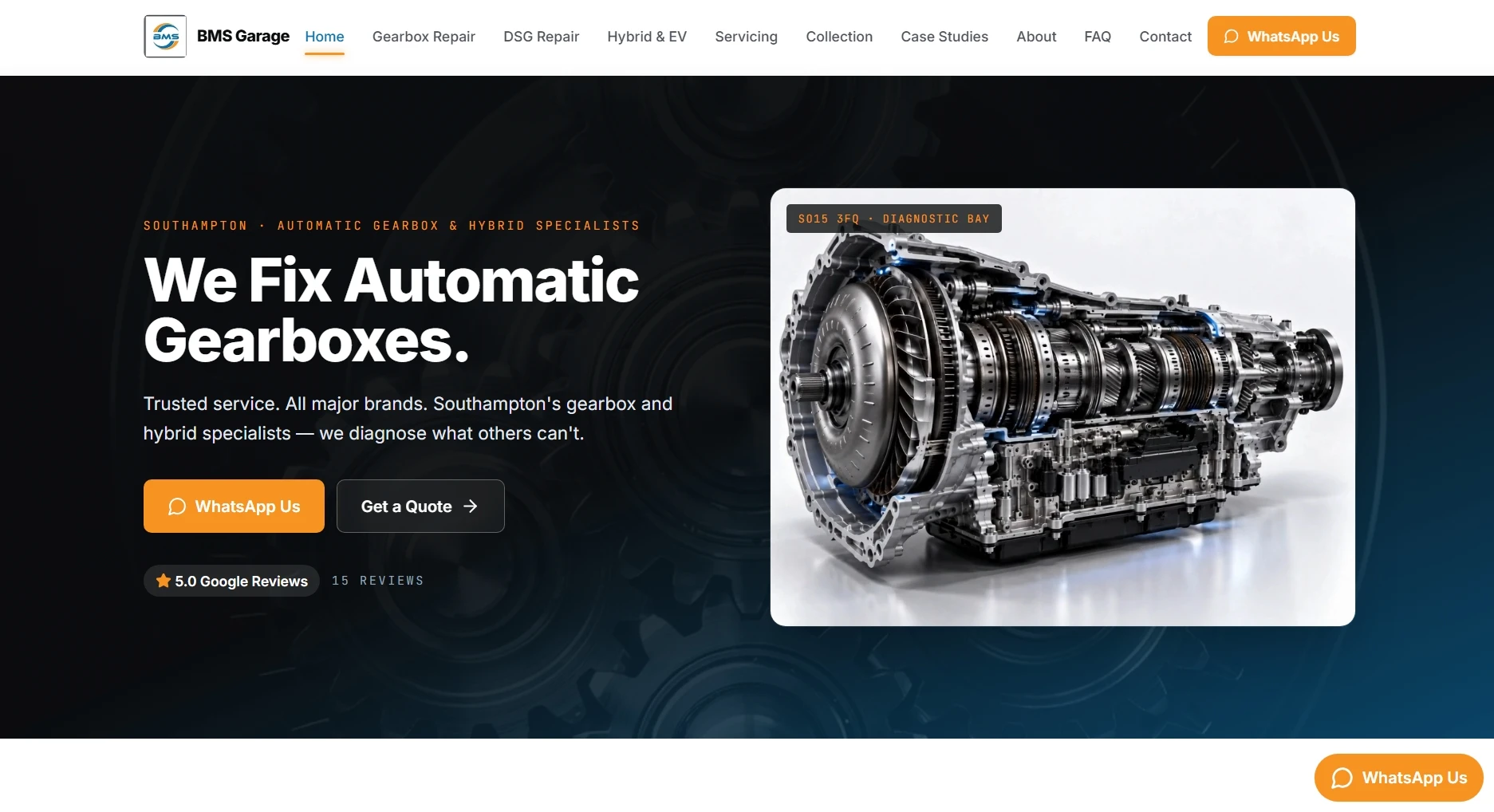
Lead-generation website & self-managed CMS
Automatic Gearbox Southampton
A lead-generation website and self-managed content system for a specialist automatic gearbox and hybrid garage. Enquiries, services and real repair case studies are managed from one admin panel, allowing the client to continuously grow the website and its search visibility without relying on a developer.
- Specialist Website
- Lead Generation
- Local SEO
- Service Architecture
- Conversion UX
- SEO Service Pages
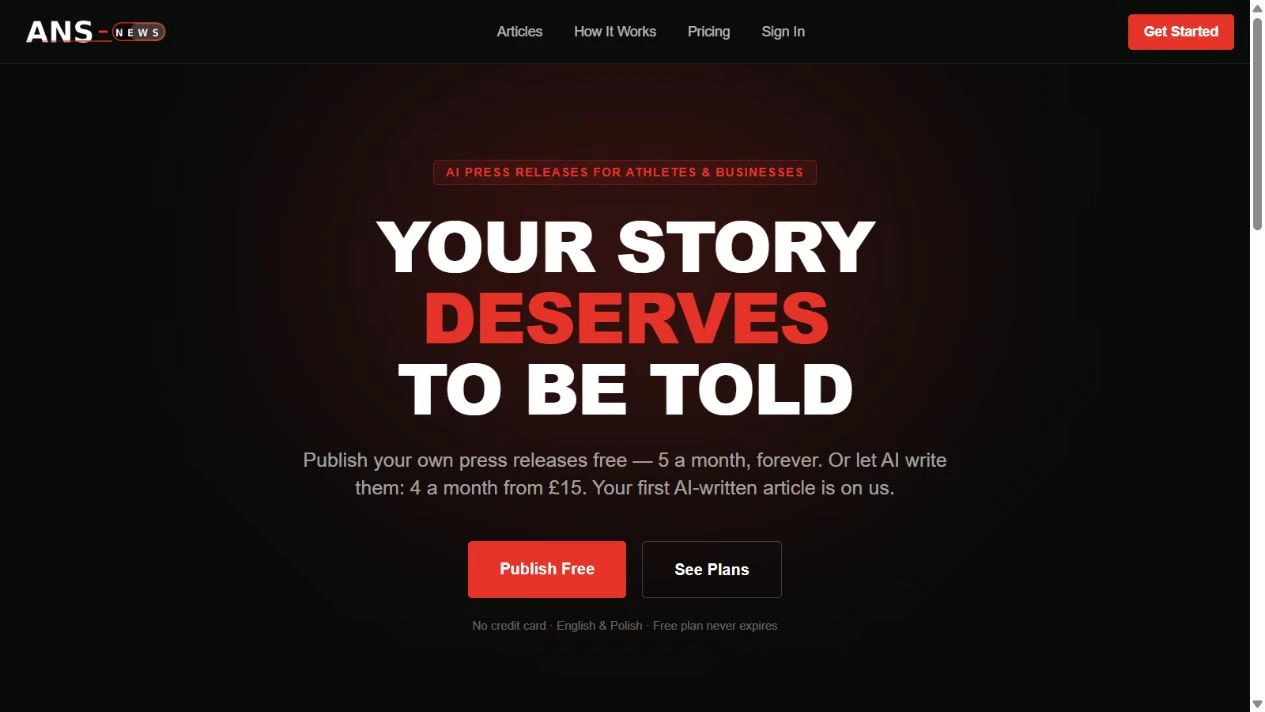
AI publishing platform
ANS News
A press-release publishing platform for athletes and businesses, combining public articles, AI-assisted writing, and a user dashboard for self-service publishing.
- AI Publishing
- Landing Page
- Conversion-focused
- Product Flow
- User Education
- Clear Messaging
Let's talk about your project
Tell me what you need and I'll come back with an honest next step.
Start a project